
Unmanned Defense Systems (UDS) is a Vilnius-based defence technology company founded in 2022. Its product line covers a complete kill chain: FORECASTER for ISR, AVENGER 5 for medium and long-range strikes, HAULER as a modular quadcopter, and SwarmC2 as the software layer connecting them. These systems are currently deployed in Ukraine.
On funding, UDS announced a €3.2 million seed round in May 2024, led by Coinvest Capital, Lithuania's state-backed fund. The round also included seven accredited angels and the NGL syndicate. Co-founder Vytenis J. Buzas and CTO Ernestas Kalabuckas personally invested €1.1 million.
We spoke with Žilvinas Kvedaravičius, co-founder and COO, to learn what it takes to build a leading defence startup around an integrated kill chain.
What Does UDS Do?
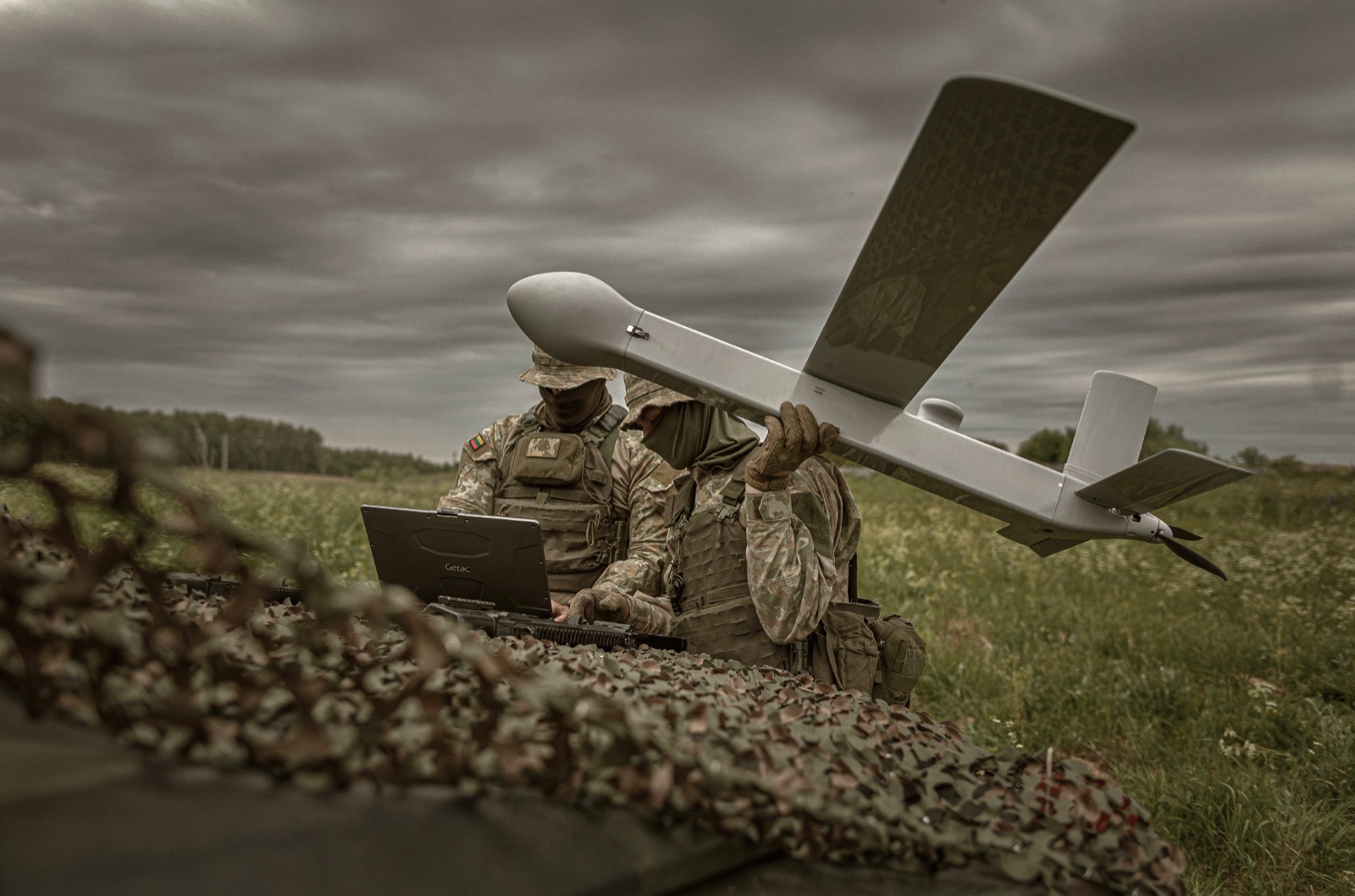
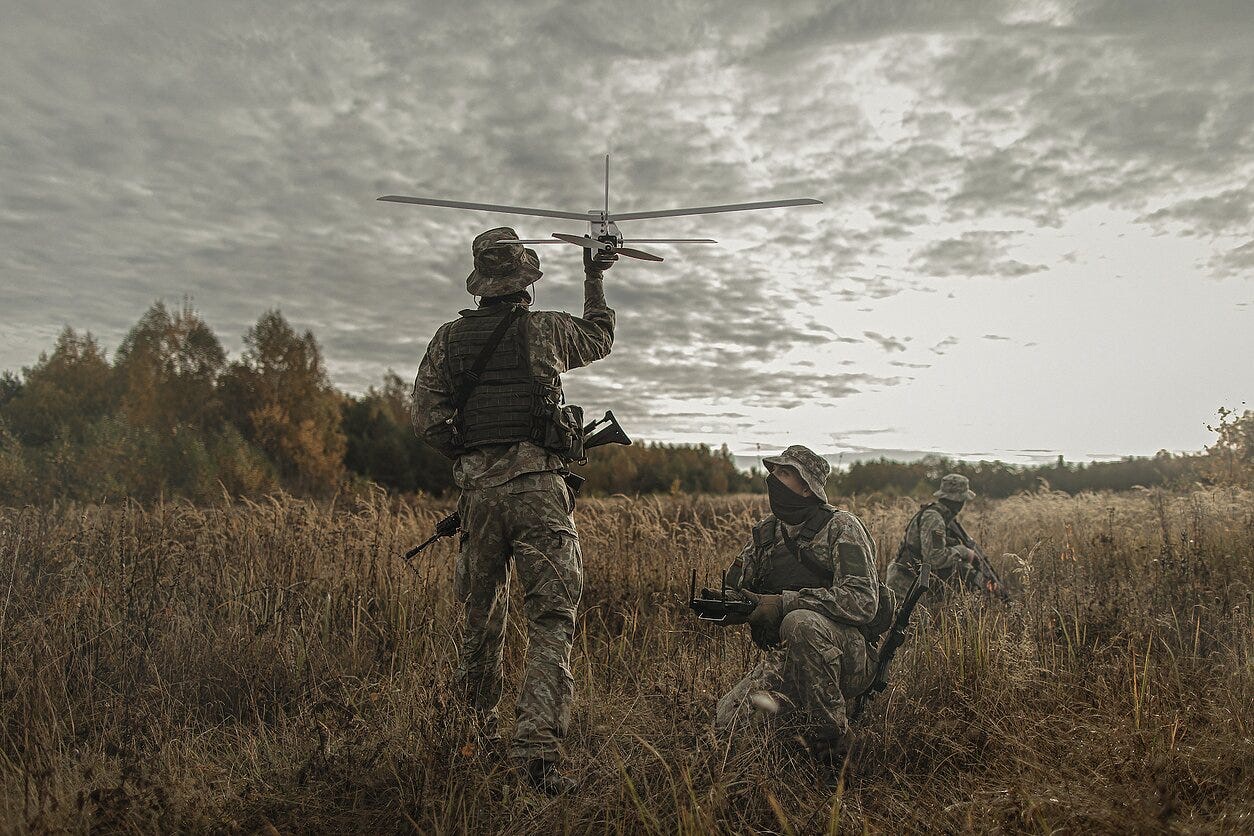
Everything we do is about the kill chain ecosystem. We cover three pillars. First, our ISR platform, FORECASTER, for surveillance and finding targets. Second, our loitering munition platform, AVENGER 5, a kamikaze drone for hitting those targets. In the centre sits our software, SwarmC2, which we use to control all the drones, plan missions and integrate with battle management systems.
That integration is critical. You can plug it directly into existing military systems, so it's not another system stacked on top of a system. It's part of a bigger picture. We've already integrated with SitaWare, ATAK and Delta, and we demonstrated to the Lithuanian Armed Forces how it all works as one cycle.
With an efficient system, you can measure the kill chain, mostly in time: how quickly you go from detection to passing the information, taking a decision and engaging the target. One objective is to minimise that time. We're also putting a lot of work into swarming, so multiple drones can be in the air at once. That gives you a force multiplier.
My thinking is this: every country's scarcest resource is people. They take a long time to train and they're hard to hire in large numbers. They're the most expensive and most valuable asset. So you need to create the biggest possible effect on the enemy with minimal resources. That's the philosophy.
Beyond that, we look at each product's competitiveness on its own. In its weight class, FORECASTER is a top one or top two platform globally on performance.
Same for AVENGER 5. We do a lot of analysis of what's already on the market so each product competes in its niche. We don't only sell a full kill chain. You can buy individual units and integrate them with other systems.
So You Kept the System Open on Purpose?
Yes, it's intentionally left relatively open. We have a big product roadmap for expansion. But we also want end users to have the flexibility to integrate with other systems. You hear "interoperability" everywhere, and it matters.
If you can only use our system with another of our systems, you're locked in, with no flexibility in dynamic environments. If Day X comes, you want to maximise the value of the assets you have.
Tell Me About the Company's History, From Day Minus One
The company started in 2022. Its first product was a mapping drone, which was quite popular at the time. As for our own story as investors and founders, the CEO, Vytenis, and I worked at NanoAvionics, which builds satellites. In 2022 we sold it to Kongsberg Group from Norway, so we had an exit. We also had good contacts with the Lithuanian MoD and the military.
Then the full-scale invasion of Ukraine happened.
Many things aligned: there was a need, a gap, we had time, some capital and knowledge of high tech. That's more or less how we came to UDS.
Where Did You Start?
Through Lithuania. The initial kick was a small grant from the Lithuanian Ministry of Defence to develop loitering munitions. In 2022 they were buying a lot of American systems, Switchblades, and launched a competition to give initial funding to a few companies to develop loitering munitions in Lithuania.
That validated the direction. In parallel, we were already selling our older Catfish platform to support Ukraine, through NGOs and our MoD.
Once You Got Into the Ukrainian Theatre, What Was the Impact of a Real Full-Scale War? Did the Hardware Perform As You Expected?
Being there, you fully understand what's needed and how it works. You get a lot of input for your roadmap and R&D. That's a big impact. But it's not only us learning. End users also learn how to operate the system better and which features to use. Sometimes that's not obvious.
What Traction Do You Have, and Who Are Your Potential Customers?
Initially, most of the traction came through NGOs and MoDs supporting Ukraine. We deliver a lot of systems that way. Last December we opened a Ukrainian entity, Unmanned Defense Systems Ukraine.
We got strong feedback from the front lines that the system is needed and that price and performance meet end-user requirements. It's easier for them to buy from a local entity, so we localised. That entity supports sales there.
We've also made sales to friendly Asian countries adopting our technology, and we have good traction in the Baltics that's now converging into sales.
How Do You Approach Production?
We have a rather unique approach. What you see here isn't a production site or a factory. We're an R&D hub, with the smartest people we can get in the room. The objective is to design and develop the product and do small-series manufacturing in-house.
Once version one or two is ready, we engage a partner network in Lithuania, Latvia and Ukraine. It doesn't matter where.
You can split our product into four or five pieces: composites, electronics, wiring and final assembly. For each we have partners from automotive, laser and medical device industries. People with high quality standards, a large workforce and know-how who can stamp out our product.
When a version is done, there's a manual plus testing and qualification steps for each part, so others can produce it.
We joke that we have huge elasticity in production capacity. If someone asks me for 2,000 drones quickly, I won't worry about hiring or buying machinery. I'll rely on external infrastructure. It also helps with MoDs, who often want localisation. A common request is: "I give you a €100 million contract. Can you do something in my country? We want returns, some know-how." This model lets me respond to that, whatever the scale.
What Were the Pivotal Moments in Building the Company?
Signing a big contract is a big reward and a big validation. We made it; we got through. Those are significant moments. Also, when you log a lot of flights and get end-user statements saying "this is what we need".
You practically verify your theory and know you're on the right path. Successful demonstrations and exercises too. After some demos in other countries, people told us our product is a killer for some big names in the industry, because it's far more price competitive and more intuitive. Feedback from actual users drives a lot.
Can You Share Anything on the Financial Side, Like Growth Rate?
We're growing steadily. Maybe we'd like it faster, but welcome to B2G. We deal with governments, budgets, ministers, and huge mechanisms that don't always work the way you expect. Still, we've multiplied both revenue and headcount pretty much every year. This year we expect significant growth in people and order intake.
You Mentioned Asia. Are Requirements Very Different From Europe, or Fairly Interchangeable?
Generically they're similar. The difference is the rate of technology adoption and understanding. Ukraine is the best at everything unmanned. They know how to adopt it and use it. In Europe, some countries are relatively close to that.
The Nordics are really keen and know what they're doing.
At NATO headquarters, they're probably still debating classification: is a loitering munition a missile or a drone, where does it sit? In the south, Spain, Portugal, Italy or Greece, people are less involved in the Ukraine matters because it feels distant. Asian markets are further away still, and they're trying to understand how best to deploy it in their own cases.
One real difference is environment: altitude, humidity and so on. That affects design and capabilities, and you need to account for it.
If You Started Over Today, Would You Change Anything?
No, I don't think so. If I'd known, I'd have done it differently, sure. We drive to Ukraine often and have a lot of time in the car for those discussions.
But everything is a learning curve. Without those mistakes you wouldn't know how to do it. With the information and outlook you had, you did the best you could.
People say, "We've done a startup before, so we won't repeat mistakes." We joke about the Simpsons scene where they keep stepping on the rake in the garden and get hit in the face.
You still step on all the same rakes. Maybe you protect your face a bit better. It's unavoidable.
On Exports Within Europe, There's Talk That Every Country Will Want Its Own Prime and Markets Will Become More Closed. How Do You See It?
There's a lot of political discussion and political will. But few markets can lock themselves in, and it doesn't make sense. If UDS were locked into Lithuania, I'd die. Literally. I need exports. Lithuania might spend €20 to 30 million a year on all types of drones. That caps the size of the company, and that's where the ambition ends. Same for Latvia.
Poland or Germany could perhaps sustain their own providers; that's real potential for economies that size. I was in Turkey a month or so ago, and many companies there stay within their own economy and don't export, because domestic spending is enough to build serious companies.
But I don't think locking up will help product development, innovation or price competitiveness. It will stay relatively global, like every other technology. Fighters, tanks and guns are all exported. Every country has something. I believe in fair competition.
As for primes, I think there'll be consolidation once the market settles. Right now there's a lot of noise and a lot of companies, all doing everything. It's hard to tell who's serious, who's real, and who's good.